Powered By Blogger

Monday, 23 September 2013

Hong Kong stepping up its game as South East Asia's art hub - Interview with Dr. Lars Nittve

Ever heard of the West Kowloon Cultural District? – If you haven’t yet, it is about time you do! The WKCD is located in Hong Kong and one of the most ambitious large-scale art projects worldwide that is currently in its first realisation stages.

Hong Kong and art, you are wondering? Well, there might not be much at the moment but once this project is in a mature stage, we are pretty confident that there will be a lot of talk in the art world and a lot to explore and talk about for art aficionados.
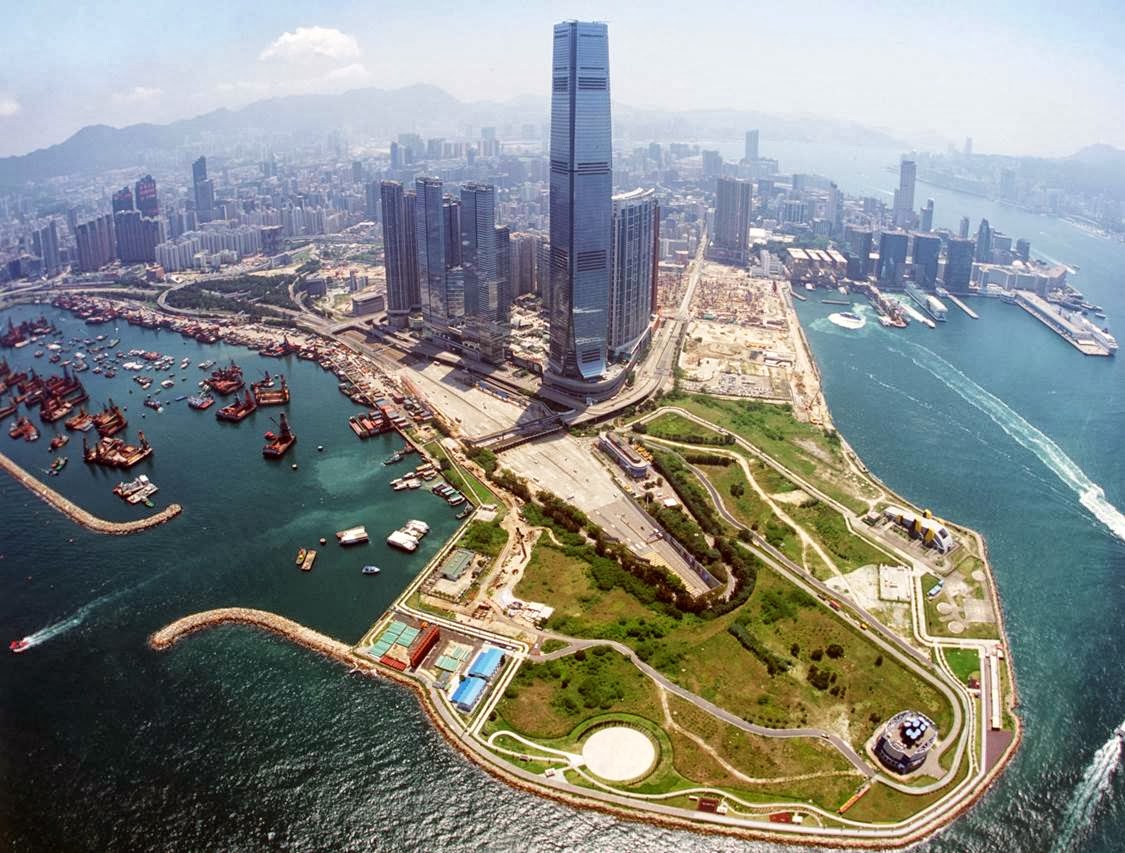

The project dates back to 2006, when a consultative committee was founded by the Hong Kong government to analyse the HK art scene and facilitate the long-term development of the city as an international arts and cultural metropolis. After 15 months of consultation and close examination, what they came up with, naturally goes way beyond dusty museums with creaking wooden floors. Within the next decade, under the project name “West Kowloon Cultural District”, 15 performing arts venues and at least 3 hectares of piazza areas, as well as a cultural institution with museum functions (temporarily called the M+) focusing on 20th to 21st century visual culture, and an Exhibition Centre with focus on arts and culture and creative industry will be constructed. 
The entire district located in prime location at Kowloon’s west harbour was designated as a low-density development with ample open space embracing a vibrant harbour front for public enjoyment and closely connected with neighbourhood community. This major infrastructure project was approved in 2008 by the Hong Kong Legislative Council.


Dr Lars NITTVE
Executive Director, M+

Dr Nittve was appointed Executive Director, M+ of the West Kowloon Cultural District Authority in June 2010 and he took up his post in January 2011. Dr Nittve has over 30 years of experience as a director, curator and educator of the arts. In the following interview, he gives insight into the unprecedented project, current challenges and his opinion and outlook about Hong Kong as an art hub:


In Hong Kong, space is one of the most precious resources. A huge space in a prime location was made available to the West Kowloon Cultural District. How does that make you feel? Does it have any meaning to you that the space dedicated to this extraordinary art project is built on reclaimed land?

The generous space given to culture and its audiences in West Kowloon is first and foremost a strong signal of the importance culture is given in contemporary Hong Kong. This sense of generosity is also fundamental for the spirit we want to achieve in the M+ project – a welcoming, open and democratic institution. Big parts of urban Hong Kong – especially on Hong Kong Island, are built on reclaimed land – this sense of artificiality is in a way central to Hong Kong urbanity. I hope that both the M+ architecture as well as the park design will take this into account and even thematise it.


How do you think/hope this project will influence the population of Hong Kong and beyond?

It will first and foremost give the people who live and work in Hong Kong a new level of access to world class visual culture – art, design, architecture and moving image. The consequences from this will of course be deeply individual– some will see their lives changed – others will be happy to have learned something new. For our first Mobile M+ event ‘Yau Ma Tei’ in 2012, we found that over 40% of the visitors were first-time exhibition goers. But the consequences for people of a cultural project can never really be predicted – beyond its economic impact. We hope that M+ will set a new standard for how museums operate in our part of the world – and how we meet our audiences and talk about and present our content.

What to your opinion is the biggest challenge of your project?

The possibility of M+ being benchmarked against other institutions in the region.  What we hope to do is set a new standard for how museums operate in our part of the world – and how we meet our audiences and talk about and present our content.

What qualifies Hong Kong to become the No. 1 art location in Asia?

I could never say that it is definitively “the No 1 art location in Asia”… But Hong Kong has some advantages, such as freedom of speech, an open, international climate with its “double” cultural identity, a great location in the region and comparatively good finances.

What impact does such a project have in the global art scene? Is the impact foreseeable? What factors does it depend upon?

To a large extent is this not something you can predict. But already now can we sense that the major museums in the West – and elsewhere – are interested in M+ as a potential future collaboration partner, representing a growing global recognition for the project as well as for Hong Kong’s art scene.

Do you think it is a challenge to prepare Hong Kong's peoples' mindsets for such a gigantic art project after having lived in an urban environment that put crudely was a vacuum for arts accessible to the wide public.

In some way it is. Compared to performing arts, the Hong Kong public has had more limited exposure to visual culture – at least to contemporary art. But there is a great curiosity – which can be seen from the extraordinary visitor numbers from both Art Basel and our own Mobile M+ projects. Inflation! received over 150,000 visitors during its run – which I believe shows a remarkable hunger for contemporary art in the city. In a way we are in the same position as those who started to create a museum scene in Los Angeles in the 1960-s – with the only difference that due to a number of factors the situation in Hong Kong will develop so much faster.

You have been founding and directing several of the most influencial art museums of Modern and Contemporary Art worldwide. To what extend is the WKCD/ M+ project different from what you have been doing previously? How does the fact that this is the first major art/museum project that you are directing in Asia influence you in your work?

It is extremely exciting, because I have to constantly challenge the existing models that I have been part of developing. I have to listen to my staff (who is 75% Asian) perhaps even more than ever before, and to the artists and collectors here in Hong Kong and be very humble. When working in Europe it was about tweaking the existing models – here we try to create something new while remembering best practice from the West.

During the press conference before the opening of Art Basel Hong Kong you implied that it was crucial not to force an already existing museum or cultural space concept upon the WKCD/ M+ but to "look at the world from an Hong Kong perspective". How will you ensure that your approach is new and original and suitable for Hong Kong?

There is no true answer. All we can do is to be as open-minded as possible, have big ears and constantly question our own trains of thought.

The M+ approach is about a very strong public service ethos. Is that a new approach to museum culture? Do you think this will make museums/art/culture more approachable? Is this your proposition for museums of the future or do you think the M+ is unique in that respect?

No it is not a new approach – but it is not developed in all parts of the world, or even of the West, and definitely in all museums. The U.K. for example have a more public service oriented museum culture than generally in the Germanic world. But in the museums I have lead I have always underlined the importance of remembering that what you do in a museum is basically to try to optimize the meeting between the content (art, design etc) and the public – you have to make two very different parties “happy”. A museum is about excellence and access – and both are equally important. It should be a proposition for all – or at least most – museums in the future.

How do you assess the momentum Hong Kong gains as an art hub through the establishment of Art Basel Hong Kong? Will Art Basel Hong Kong influence your project?

The establishment of Art Basel in Hong Kong is of course both a consequence of a process that has been going on for a number of years while at the same time giving further momentum to this development. What it does for M+ and West Kowloon is to both help bring contemporary culture to the attention of media and a wider public in Hong Kong. The arrival of a new fair also underlines the importance of the establishment of major non-commercial institutions as a counter balance to the commercial development in culture.

Interview conducted by Dorit Papenheim

Saturday, 2 June 2012

Louis Vuitton - Marc Jacobs - Exhibition at Musée des Arts Décoratifs

It appears fashion exhibits become increasingly popular and attract more and more visitors. A trend that has received yet another boost by "Alexander McQueen - Savage Beauty", which was displayed at the MET in 2011, but surely reflects also the zeitgeist of people acknowledging fashion as a mean of expression and  significant component of pop culture.
Les Arts Décoratifs in Paris, which frequently hosts fashion related exhibitions, is currently showing "Louis Vuitton Marc Jacobs" from the 9th of March until the 16th of September 2012.


A comparison - or should I say confrontation - of two individuals, who at very different epochs could establish themselves as designers and innovators who contributed to the world of fashion and who helped build up the brand Louis Vuitton at each of their eras and both in their own right.
Could Louis Vuitton (1821 - 1892), founder of his namesake company, which has grown to become one of the globally best known fashion brands and integral part of the world's biggest fashion & luxury conglomerate LVMH have dreamt of the role his company and name would still play in today's fashion circus? What do those two men have in  common? Where lie their differences? Which role did they play for the brand Louis Vuitton? And how have those two men contributed to Louis Vuitton still being significant today?
These are just a few questions, this exhibit seeks to elaborate.


One man growing up amidst the exciting times of industrial revolution, witnessing increasing urbanization, technical inventions, profound changes in the social, economic and cultural conditions of the times.
A contemporary of Gustave Eiffel, famous architect who built the Tour Eiffel for the Exposition Universelle in 1889 and Charles Frederic Worth, the Englishman who historically has been credited as founder of Haute Couture and the first big Parisian fashion house in the 19th century.
Louis Vuitton, a craftsman with a vision and a great business instinct, who offered his product range - customized luggage for fashion- to the affluent bourgeoisie of Paris. His product innovations included compartmentalized suitcases, a folding bed that could be transported in a suitcase as well as his probably most important invention: a water- and airproof coat, which made his suitcases extremely durable and therefore highly requested by the wealthy social class who could afford to travel. As Louis Vuitton was very far sighted, he patented several of his inventions in order to be able to maintain his position as an innovator and market leader and to be able to avoid his competitors from copying his products.
After his death in 1892, his son George took over the family business, continued with its international expansion and amongst other things introduced the world renown, highly coveted (and most counterfeited)  LV- signet in 1896.


On the other side, Marc Jacobs who has been holding the creative reign at Louis Vuitton for 15 years. The American designer, who in 1984 graduated from Parson's School of Design in New York City, who worked several years for Perry Ellis, where he was dismissed after his controversially received (yet, up until today famed) collection "Grunge" in 1993. Marc Jacobs - together with his business partner Robert Duffy - returned to his namesake brand, which only took off after Bernard Arnault, chairman of LVMH agreed to finance Marc Jacob's eponymous brand and helped opening his first store on Mercer Street in NYC after he signed a contract to design for one of the big brands of his group.


In January 1997, Marc Jacobs took over the position of creative director at Louis Vuitton, a brand, which despite its great success with bags and leather goods up until then did not even have a ready-to-wear line. What followed was a victory parade of RTW collections and a number of design collaborations with the likes of Stephen Sprousse, Richard Prince and Takashi Murakami, which helped to define the image of Louis Vuitton and turn the brand from a classic French brand for bags and luggage into one the world's most widespread, well-known and profitable luxury fashion brands.


In this exhibition, two worlds collide - the best way to wrap it up in a few words is to say it encompasses snapshots in the history of a brand throughout two world-changing eras (industrialization on the one hand side and globalization on the other). Each of those men accompanied and led the brand Louis Vuitton forward as a creator and innovator, who embraced the challenges of his time.
 
Thankfully each of the sections dedicated to one of its subjects is located on a different floor. The stairs escalating from the Louis Vuitton section to the Marc Jacobs one hardly suffice for the mental switch one has to flip in order to readjust ones brain from the lifestyle of the 19th century to the challenges of the 21st century.
(The Marc Jacobs section is started with Marc's World, where the spectator gets a peek into the designer's colorful world of inspiration through numerous film clippings displayed on computer screens ranging from J.S. Bach to Spongebob, a nude Vivien Westwood, Liz Taylor and many more...).


An exhibition definitely worth visiting, however, the cohesion of the two sections dedicated to each of the designers are few and are mostly to be found in the way, both Vuitton and Jacobs understood and worked the zeitgeist and requirements of their customers for novelty and lifestyle throughout their challenging times.

xoxo
Glamazone


Sources: www.lesartsdecoratifs.fr, http://online.wsj.com/article/SB10001424053111903918104576500332879275742.html
Picture Sources: www.lesartsdecoratifs.fr, 

Saturday, 4 June 2011

Must see of the moment: l’exposition "Madame Grès, la couture à l'oeuvre"

What is it that makes the setting of the exhibit "Madame Grès, la couture à l’œuvre" in the Bourdelle museum in Paris so perfect? Or what do Germaine Émilie Krebs and Antoine Bourdelle have in common? It is the fact that both Germaine Émilie Krebs and Antoine Bourdelle were sculpturors? One worked with stone, whereas the other one worked with fabrics.
 At first glance, it might be a challenge to depict similarities. Among the mighty statues of Antoine Bourdelle, Madame Grès' rather filigrane gowns appear very delicate and abstract. Yet, the formally trained sculptress, whose signature was the sensual austerity, felt that several analogies could be drawn between her haute couture designs and classic sculpturing.
“I wanted to be a sculptor. For me, it’s the same thing to work the fabric or the stone” she is famously quoted.

The retrospective dedicated to Germaine Émilie Krebs - Madame Grès and Alix Barton were her alias names - is showcasing 80 pieces, which make the spectator travel through 50 years of her life's work starting from 1934 (her "Alix" period) until her last gowns from 1989, which at that time had been commissioned by Hubert de Givenchy. To round off the mise-en-scène of the sculptures of fabric, a large number of drawings and original photographs of her garments have found its way in the exhibit and stress the unbelievable timelessness of her evening dresses.
All made of jersey, the elaborate robes endure through time without appearing anyhow outdated or old-fashioned. Quite the opposite even: Somehow, the draping and folding techniques complement the natural silhouette to an extend where the fluidity of the jersey merges with the movements of the body. None of the components is dominating the other - neither the dress nor its wearer is in the foreground - it is the blending of the body's characteristics with the natural properties of the jersey fabric that makes the overall appearance so coherent and everlasting.

Following a very modern approach for her times, Madame Grès refrained from the use of confining corsets and constricting materials. Instead, she created coats and dresses that followed natural shapes and worked out particular features and volumes through braiding, draping and billowing of the fabrics. Folding of cloth played a major part in her designs - the “pli Grès”, a folding technique that made upper parts of dresses fit like a glove and resulted in dozens of layers of fabric cascading into elegantly voluminous skirts. 

Daring cut-outs, assymetrical necklines, columnar evening gowns that are referencing Greek or Roman godesses and draped capes with hoodies; due to her immaculate draping skills, the perfect balance between exposing and covering of skin, every item in this exhibit is breathing and testifying elegance, savoir-faire, couture, precision, minimalism and sophistication. 


Her appointment as "Honorary President for Life of France’s Chambre Syndicale", the governing body of the French fashion industry shows the influence she had on French couture. Also, she had dressed important society ladies like the  Duchess of Windsor and Jacky Kennedy as well as actresses like Marlene Dietrich and Greta Garbo. Yet, despite being the no less reknown contemporary of Gabrielle Chanel Jeanne Lanvin, Madeleine Vionnet and Elsa Schiaparelli, Madame Grès' name has sadly faded in their comparison.

Madame Grès died in solitude 1993.Only one year later, her passing was announced in Le Monde. She had turned her back on the fashion industry after she had to sell her brand and name rights in the late 80ies.

The exhibit “L’exposition Madame Grès, la couture à l’œuvre" is a beautifully staged tribute to her talent, artistic contribution to the fashion industry and to her strikingly timeless designs, which deserve to be acknowledged way beyond her death.

“Madame Grès: Couture at Work”
Through July 24.
Musée Bourdelle
16 rue Antoine Bourdelle, 75015 Paris


xoxo
Glamazone


Sources: www.bourdelle.paris.fr, www.paris.fr 
Picture Sources: Sneha Meghe aka Yang Chen jun. (Merci, cherie!!!)
Special thanks: Merci for that beautiful day!!!

Tuesday, 3 May 2011

Bittersweet symphony - MET honors Alexander Lee McQueen with a retrospective

Last night, May 2nd 2011, the annual Costume Institute gala at the Metropolitan Museum of Art was all about a bittersweet farewell. The gala was the opening event to the annual exhibition of the Costume Institute, which this year is dedicated to Alexander Lee McQueen. From May 4 until July 31st, the MET will be hosting "Alexander McQueen: Savage Beauty" - a tribute to the late designer extraordinaire and his prolific career.
From his graduation from Central Saint Martins in 1992, where his long lasting confidante Isabelle Blow bought his entire first collection to his final one, which was shown posthumously in March 2010, the exhibition shows a careful selection of his magnum opus.

The exhibits were primarily selected from the Alexander McQueen archives in London and complemented by pieces of private collections and the Givenchy archive in Paris. Two production designers of his fashion shows - namely Sam Gainsbury and Joseph Bennett - have been serving as creative director and production designer for the exhibit, which clearly suggests that the setting of the exposition will not only display the remarkable garments but also the poetic narrative behind every collection.

Also, the setting of the Costume Institute gala was fit for McQueen. Scottish bagpipes paid tribute to the designer's Scottish origin, while a replica of an oak tree in the Great Hall of the MET referenced to the ones on McQueen's property in Sussex, England.

Just as the title, which already epitomises the designers inner conflict and his subsequent perception of aesthetics, "Savage Beauty" is an exhibition which displays the omnipresent duality Alexander McQueen has mastered to build his collections around like no other. Andrew Bolton, curator of the Costume Institute, tells that Lee McQueen sometimes referred to himself as the Edgar Allan Poe of fashion, yet besides the strong narrative, the craftsmanship and creative mind of McQueen are highlighted throughout the exhibition. The exhibition is fragmented into themes - The Romantic Mind, Romantic Gothic, Cabinet of Curiosities, Romantic Nationalism, Romantic Exoticism, Romantic Primitivism and Romantic Naturalism - and takes the visitor through the different stages in the designers career. His different inspirations and fervours like art, painting, history, literature are paid tribute throughout every theme. Also, the staging of the garments is accompanied by footage of his ten most iconic fashion show moments, which again underline his talent as a storyteller, his sense for a grand entrance and his - in the fashion world- unmatched cinematic showmanship.
The MET's blog offers a beautiful selection of video excerpts of Alexander McQueen's fashion shows and a brief illustration of the exhibit by curator Andrew Bolton.


The MET gala - which marked the opening of the exhibit devoted to the British designer usually has a lot of gloriously glamorous fashion moments to offer...this year however, the priviliged attendees excelled by flaunting a ravishing array of Alexander McQueens late designs. Also, some other spectactular robes - i.e. Zac Posen, Givenchy, Pucci & Stella McCartney supplied that extra dose of glamour and drama. My personal favorites - and this time it was truly hard to pick were: Karolina Kurkova in Jean Paul Gaultier, Christina Ricci in Zac Posen, Crystal Renn in Zac Posen, Giselle Bündchen in Alexander McQueen and Salma Hayek in Alexander McQueen.

Quote of the evening: When asked how McQueen would have reacted on a gala and exhibition hosted in his honour, Philip Treacy, one of the designers confidants dryly responded "He would not have come".


xoxo
Glamazone

Source: blog.metmuseum.org, www.style.com, WWD.com, www.wmagazine.com
Picture Source: blog.metmuseum.org, www.wmagazine.com

Sunday, 3 April 2011

Newcomer to watch - Yiquing Yin

Yiquing Yin, French designer with Chinese descent knows how to design collections that dreams are made of. That is one reason that makes her one of the interesting emerging talents to have on the radar for the future.

The garments of the 25-year-old, who graduated of the École nationale supérieure des Arts Décoratifs in 2009, have the surreal appeal of dreams and feelings shaped into sculptures. They express both the designers technical skills as well as her personal fragility and inner emotional conflicts.
Yinquing Yin manages to instrumentalise movements of the body and combine them with the fluidity of fabrics to an ensemble of texture, volume, structure and proportion that is intricate, elaborate and yet possesses an incredible softness.

Yiquing Yin was one of ten young artists, who annually take part in the Festival International de Mode et de Photographie à Hyères, where the designer reached the finals with her S/S 2011 collection "Exile". The internationally reputed festival gathers once a year under the patronage of an international panel of experts of the likes of Raf Simons, Tim Blanks, Lazaro Hernandez & Jack McCollough, Cathy Horyn, Carla Sozzani (jury cast of 2011) to provide emerging designers with a platform and support.
Also, Yiquing Yin was awarded with the Grand Prix de la Création de la Ville de Paris in the category upcoming designer.

As a special perk during Paris Fashion Week A/W 2011, she was amongst a selection of eight young Parisian designers, which were picked by French Vogue to showcase a selection of their most significant pieces at the first edition of  Petit Salon des Jeunes Créateurs at the Hôtel de Crillon. Selected pieces were also featured in the March issue of French Vogue and footage about the designers was featured on the Vogue website.

The garments Yiquing Yin has presented so far channel her past, which was characterised by her life as a child of refugees, who came to France when she was four years old. "Exile" translates her emotions, identity and self-perception that is dominated by her destiny as a refugee as well as her grief and puts it into the dreamy constructs that her garments are.
Cocoon-shapes and sophisticated flowy drapes accomodate her desire for protection and appear like a soft armour. While fabrics float and caress the silhouette,  the delicate materials enwrap the body like a second skin.

We are surely looking forward to seeing more of Yiquing Yin and very much hope she will be able to keep up the delicate sensuality of her garments and continue to transport her emotions in her collections.


xoxo
Glamazone

Source: www.villanoailles-hyeres.com, www.yiqingyin.com, vogue.fr
Picture Source: www.yiqingyin.com

Monday, 21 March 2011

Model of the moment: Arizona Muse

Fashion weeks are over, brands are fêting their praise of the industry (chez Prada, Alexander McQueen, Fendi, Haider Ackermann et al), are licking their wounds if their efforts have not been appreciated ( Maison Martin Margiela) or are busy resolving scandals and their effects (Dior).

Meanwhile there is plenty of time to take a closer look at the model that emerges on the top of the list after the fashion week marathon and whose name is on everyones' lips: Arizona Muse.
How can you not become famous with a name like that?!
Obviously, it does help if you have the abstract beauty, expressive wide-set eyes, strong eyebrows that make Muse's recognition value and being absolutely ubiquitous during New York and Paris Fashion Week does help to push a career as well.
The 20-year old American who was born in Arizona - hence her name - was discovered in 2008 already, as she had a baby break, she stopped modelling for 1.5 years, only to return to modelling in 2010 and take off after the A/W 2011 shows.
During her second season, the 5'10'' tall Arizona already scored all major designers and could be spotted during every big name's show. Galliano, Dior, Chanel, Prada, Louis Vuitton, YSL, Versace, Burberry...the list is endless. Despite the numerous catwalks the American beauty scored, she is also featured in two major campaigns this season: Prada's adorable colourful spring/summer campaign, which was photographed by Steven Meisel and which truly unfurls its full good-mood effect in its appendant campaign film.
Furthermore, Arizona Muse ran off Daria Werbowy as the face of YSL's current print campaign and was also selected for the spring/summer campaign film under the creative direction of Stefano Pilati, which was shot by Inez van Lamsweerde and Vinoodh Matadin in Marrakech.
Being a relative newcomer, it is quite remarkable that Arizona is ranked 23rd on models.com. Counting Vogue covers, a 60-pages fashion editorial as well as four different covers of the March issue of Dazed & Confused magazine, it is pretty obvious, that the fashion industry has found the face that we can expect to see a lot more of in the not so distant future.

xoxo
Glamazone

Source: models.com
Picture Source: style.com, models.com

Thursday, 10 March 2011

Doing her mentor proud - Sarah Burton shines with her Alexander McQueen fall 2011 RTW collection

“The Ice Queen and Her Court” was the magical title of Alexander McQueen's fall 2011 collection and the show did not fall short of giving us every single ounce of drama we have been craving to see on the catwalks of this year's fashion weeks and instead got so plenty adjacent to them.


Sarah Burton combined the duality of Romanticism - the delicate, light and fragile world of beauty and innocence with the dark, twisted and dangerous side of mysticism.
The venue of the show was La Conciergerie, former royal palace - and prison of crowned heads like Marie Antoinette before her execution- whose gloomy medieval halls had already hosted one of Alexander McQueen's spectacular shows in 2002.

Classic McQueen silhouettes - which Sarah Burton called the "heritage silhouettes" of the brand dominated the collection, yet, their execution was exquisite and had plenty of nouveau elements.
Inuit influenced fur details in stone grey or black that were sewn along hems and cowls, numerous zippers that were carefully integrated into the structure of garments, or alternatively lacing that was enhancing both the cut as well as catering as eye catchers.
Flowy dresses paired with leather harnesses that reminded of a Viking goddess and various types of fur and feathers combined to a harmonious structure of a dress.


The real spectacle of the show however were the skillful honeycomb structures that had been carefully crafted of organza and silk, forming exquisite flouncy skirts and dresses. Another ravishing detail were the elaborate fitted bodices made of mosaic china fragments.

The intricate fabrics and  the blending of soft and hard textures - leather elements were combined with feathers or fur, chiffon was ornated with rivets and a stiff surface of china fragments was combined with the most fragile looking trail of tulle and silk.

The styling comprised of a mixture between Tilda Swinton's appearance as Jadis, the White Witch in the Chronicles of Narnia with her mythical and theatrical beauty and a modern day warrior, which was complemented by the up-does that looked like a helmet formed of barrettes.
Chokers, collars and over knee laced platform boots mitigated the delicate look and gave it some edge of the real world.
A collection that would be fit for a costume designer and one that convinced the last skeptic that Sarah Burton was an excellent choice to perpetuate the challenge in succeeding Alexander Lee McQueen's reign at his eponymous brand.

The exquisite garments with their dark romantic touch that would have done Hans Christian Andersen - author of the fairy tale "The Snow Queen" proud.


xoxo
Glamazone


Source: style.com, WWD.com
Picture Source: style.com, WWD.com

Friday, 4 March 2011

The Gaga Show - Nichola Formichetti's debut at Mugler

March 2nd 2011, from 9pm onwards, one could witness Nichola Formichetti's debut as creative director at Mugler via live stream on facebook.
The Mugler A/W 2011 RTW collection surely was one of the most anticipated events of Paris Fashion Week after Nichola Formichetti -  Lady Gaga's acclaimed stylist, fashion director of Vogue Japan, fashion director of Uniqlo and creative director of Dazed and Confused Magazine had been named creative director of  Mugler next to also newly appointed designer, Sebastien Peigné.

 After some additional Twitter frenzy over Lady Gaga walking Formichetti's show, quite a number of people logged on to facebook to watch the Mugler A/W 2011 RTW show live. Over 40 mins, one could peek behind the stage and watch numerous activities previous to the show from various camera angles. Admission, make-up, models, Lady Gaga, friend, muse and favorite pet of the stylist getting ready and practicing her last moves. Two of the titbits - may they have been spontaneous or rehearsed - were Lady Gaga announcing laconically that it would be even good press if she would vomit on stage and secondly that she just wants the public to say that she is a beautiful woman after the show (oh come on - still not over the polemic, are we?!).


The scenery for the runway was a mixture of an enchanted forest and a gothic cathedral, which set the stage for a show that ressembled a mixture between fashion, Lady Gaga self-promotion and a chaotic hide-and-seek game in dim flickering disco light. The models were half strutting, half stumbling on the platform wedges (the only one who mastered them effortlessly was Gaga) putting on a show that was composed of clutching along the pillars, lip synching a medley of Lady Gaga's latest album - featuring her "Born this Way" anthem- clenching their teeth, displaying their figurative claws and striking a vamp-y pose for the photographers. Check the official directors cut here.

Many of the garments of the show called “Anatomy of Change Femme – Mode Sans Frontiers,” featured Thierry Mugler's signature giant epaulettes, which had made the designer famous in the 80ies. Otherwise, the clothes featured a lot of sheer tops, or tops with sheer cut-outs revealing the bust or tiny synthetic bustiers. Skin tight membrane-looking clothes took turns with avant-gard garments which seemed futuristic and outlandish. Glossy elements were combined with natural textures - creating a look that made me think of the Borg of Starship enterprise - a fictive civilisation, which strives to be a superior race by sometimes brutally assimilating nature with technology. An association which might also be explicable by the fact that the Nichola Formichetti named Rick Genest aka "Zombie Boy"as his latest inspiration at the brand Mugler.

Nichola Formichetti, darling du jour of the industry surely gained some more momentum by this fabulous show and may just have promoted his vision of outlandish and eccentric beauty (I actually really think the time has come to pass the word gaga-esque as part of our vocabulary) a little more. Also, he managed to communicate his vision of the future of fashion brands, which is a seemless blending of showmanship, media communication, fashion, lifestyle and a sentiment, attitude and atmosphere at the same time.
The showmanship of the event was surely convincing and could live up to the hype. The limelight however was rather on Lady Gaga and the overall show elements than on the clothes. Also, the lighting, the labyrinthine scenery and extrovert posing and lip synching of the models was that much input that it took away attention from - what used to be- the actual core of the show: the collection.

All in all a successful publicity stunt that surely brought Lady Gaga, Nichola Formichetti and the label Mugler into many headlines. (One of the first headlines after the show being that Lady Gaga, already "bought" the entire collection ...surprised anybody?!)

xoxo
Glamazone

Souce: www.mugler.com
Picture Source: www.nicolaformichetti.com, WWD.com, style.com, fashionista.com

Wednesday, 2 March 2011

Filling a void - Dior's bird of paradise ousted

After John Galliano's rapid layoff at Dior on the eve of Paris Fashion Week following a line of unpardonable and allegations of racism and anti-Semitism, the fashion industry is holding its breath and standing as curious onlookers waiting to watch how a former golden child is falling from grace.
Luxury conglomerate LVMH rapidly executed its zero tolerance policy and suspended the couturier from his post as creative director at Dior on Friday, 25th of February 2011.
After cumulative accusations, which have peaked in the release of a rather shocking video on youtube, where the obviously intoxicated couturier is mumbling Nazi sympathatic remarks as well as anti-Semtitic abuses, he was finally let go of his position at Dior on February 28th.
Natalie Portman, newly crowned Academy Award winner, Dior ambassadress and new face for Miss Dior Cherie who in a strong official statement distanced herself instantly from John Galliano and declared that she "is proud to be Jewish" and "...shocked and disgusted..." by the designer's action and wishes to disassociate herself clearly from his persona.
How quickly the public distanced itself from designer extraordinaire was also reflected by how few celebrities sported the brand Dior on the red carpet of the Academy Awards this sunday - only Nicole Kidman and Sharon Stone adhered to their robes designed by John Galliano.

Finally today, Wednesday 2nd, John Galliano's much anticipated statement was released by law firm Harbottle & Lewis:

  
“I was subjected to verbal harassment and an unprovoked assault when an individual tried to hit me with a chair having taken violent exception to my look and my clothing. For these reasons I have commenced proceedings for defamation and the threats made against me,” Galliano said in the statement. “However, I fully accept that the accusations made against me have greatly shocked and upset people.”he also said that he''ll take full responsibility for the “circumstances in which I found myself and for allowing myself to be seen to be behaving in the worst possible light. I only have myself to blame and I know that I must face up to my own failures and that I must work hard to gain people's understanding and compassion." 
"I have fought my entire life against prejudice, intolerance and discrimination having been subjected to it myself,” he further stated. “In all my work my inspiration has been to unite people of every race, creed, religion and sexuality by celebrating their cultural and ethnic diversity through fashion. That remains my guiding light.”


Fellow couturier icon Karl Lagerfeld added fuel to the facts of the case stating the following to WWD: "I’m furious that it could happen, because the question is no longer even whether he really said it. The image has gone around the world. It’s a horrible image for fashion...". Also, Lagerfeld pointed out that fashion is "...a business world where, especially today, with the Internet, one has to be more careful than ever....". He ranted on to be furious with Galliano for being ungrateful and having seriously harmed CEO Bernard Arnault's pet label of conglomerate LVMH.

Irrespective of the negative short term ramifications this incident and subsequent media pandemonium will have on Dior, the long term impact of Galliano's departure on the legacy of couture house Dior remains to be seen.
Having been in charge of Dior since 1996, John Galliano unmistakably left his signature fingerprint and fused his creative genius and showmanship with the brand. The fashion world is already starting to speculate who might be capable of stepping into John Galliano's larger-than-life creative footprints at Dior who bestowed some of the most dramatic, memorable and remarkable couture moments on us during his 14 years of creative reign at Dior.


xoxo
Glamazone


Source: www.WWD.com, www.fashionologie.com, runway.blogs.nytimes.com,
Picture Source: spiegel.de, style.com, modeview.com

Sunday, 27 February 2011

Reminiscent yet modern - Versace A/W RTW 2011

The venue that was selected to host the Versace catwalk show - Via Gesu Milan, the couryard of her deceased brother Gianni's Milan mansion - already suggested that Donatella Versace would be walking down memory lane with her current collection.

Apparently, Donatella had grappled with the maison's history and archive recently and processed this in her garments, which seemed more to the point than usual and less flashy at the same time.
The ubiquous sexiness that is the predominant streak in every Versace collection was pleasantly reticent and consequently more appealing. A signature baroque Versace curlicue was rediscovered and echoed in bold colourful snaky details that meandered around the otherwise plane and sleek garments. The colour palette comprehended a lot of black and white and was spiced up with purple and petrol shades as well as the occasional canary yellow. Quite startling that in a season where most big Italian brands went fur and exotic skin galore that of all things Versace went a little more low key than usual and won us over with a sleek sexiness that was less brash and in-your-face.


Versace blended feminine cuts with military style and created beautiful jackets that convinced with their sharp cuts and simple bold details like gold buttons with the Medusa signature emblem and golden belt buckles. The angular sharply tailored assymetric dresses with the sexy side slits and smart back cut-outs were as simple as they were effortlessly stylish. The balancing act between sleek restraint and sexy decadence  - reflected in particular by the leather outfits which comprised black pleated glazed leather skirts -was nicely managed and spiced up with beautiful peep toe boots in various executions - ranging from laced glazed leather boots to patent leather ones - as well as desirable hobo bags. The usage of furs and exotic skins seemed rather dosed compared to other collections during Milan fashion week - who would have thought that this is something you might ever write about Versace?! Also, observable was that this collection paid significantly less attention to the eveningwear than usual but the few pieces shown were a direct hit.


The combination of simple yet sharp cuts and bold Versace signature details made the collection striking and powerful.


xoxo
Glamazone

Source: style.com, WWD.com
Picture Source: www.style.com, www.WWD.com

Monday, 21 February 2011

Blending Boho - Matthew Williamson A/W RTW 2011

British Designer Matthew Williamson's inspiration this year was one of Russia's premier avant-garde artists: Francisco Infante-Arana, who made himself a reputation by blending mirror installations into nature to evoke a visual fusion of nature and modern materials.


The contrast of textures, the antagonism of surfaces was mirrored in Williamson's collection, which seemed to be an artsy approach to his grown up bohemian girl.
Like the artist Infante-Arana, Matthew Williamson indulged in a mix of textures, reflections, graphic prints, which echoed in a toned-down way in the wool and leather outerwear.


The recognition effect of Williamson's sophisticated hippie woman, which reflected in Mongolian vests, embroidered dresses and woolen outerwear was combined with leather biker trousers and skirts as well as some sheer synthetic blouses. The weak points in the show were the combinations of plain cut trousers in graphic prints with semi-translucent blouses as well as the assymetrical wrap skirts, which did not transport the otherwise light effortless feeling of the collection. At the same time, some of the coats with fur lining, graphic prints and embellishments seemed too forced.

A collection with interesting silhouettes, sophisticated combinations of textures and materials which left room for lightness and glamour at the same time.

xoxo
Glamazone

Source: WWD.com, style.com
Picture Source: WWD.com, style.com, todayandtomorrow.net, ilikethisblog.net

Tuesday, 15 February 2011

Severe with a twist - Marc Jacob's A/W 2011 RTW

  If one had to brainstorm compatible materials for a collection, latex and lace seems like an odd choice - not for Marc Jacobs apparently - which he proved today in his fall/winter 2011 ready to wear collection.
Jacobs, who triggered the big 70ies boom that has strongly been channeled during New York Fashion Week this season, has clearly moved on from this homage to Yves Saint Laurent's glamour hippie look and is displaying quite a contrast in his current collection.
Strict silhouettes, strong cuts and prim necklines replaced last season's effortless fluidity and left a far more rakish and sexy impression as one might expect from those buttoned-up styles at first glance.
Marc Jacobs paid tribute to himself by reviving some themes of previous collections - the polka dots for example were an ode to his first collection, which was showcased 20 years ago - and spicing them up through an eclectic mix of textures and fabrics. Fake fur met synthetic materials, latex met lace, vinyl met real fur. Jacobs managed to deliver a strong collection which looked serious and kinky at the same time - feminine, elegant shapes with an undeniable ironic twist to them - i.e. a rubber dress that was processed to look like sequins.

The girlish polka dot theme resurfaced in every imaginable and unimaginable material and size - from tiny spotted socks to three dimensional vinyl buttons and polka dot embellishments in a wide array of textures and materials. The colour palette ranged from classic navy to burgundy, grey and black combined with the occasional white shirt.
Sharply tailored outerwear emphasised the fitted silhouettes of the skirts and dresses and added that dash of sophistication to the outfits.

Despite the prim and austere look, accessories like the short gloves, playful mini-baretts and pill box hats that were fixated with a tight chin strap were just the coquettish icing on the cake of the collection.

J'adore! A very smart-looking collection which managed to conjoin seemingly contradictory materials and statements to a very contemporary and elegant look.


xoxo
Glamazone

Source: WWD.com, style.com
Picture Source: style.com

Tuesday, 8 February 2011

LVMH carving out its territory at Hermès

Could Hermès International one day possibly collaborate peacefully with its most rivalling competitor LVMH Louis Vuitton Moët Hennessy - personified by CEO Bernard Arnault? After fighting out the circumstances of the equity swaps - which resulted in LVMH owning 20.2% shares of the family-owned company publicly, one may doubt so. Despite Bernard Arnault's previous assertions that LVMH's intentions were "peaceful" and of "friendly nature", he recently added in a press conference, that he does not intend to remain a passive shareholder in the company.

Currently, French market regulation is still examining the exact circumstances of the equity swap, which did not only arouse numerous questions within the hereditary family of Hermès but also rose the question of stricter regulations within the French market.
As a consequence to the rather surprising intrusion, the founding family has recently created a holding company, which will enable the family to pool the approximately 70% of shares which remain in its possession and hinder further purchases by external stakeholders.

Despite delivering a more than solid performance in 2010, the LVMH share fell on 4th February after LVMH failed to exceed analysts' expectations. Profits from recurring operations rose by 29% percent to 4.32 billion euros in 2010. The revenue of Louis Vuitton brand drove the profit, with its raised prices and new product lines like the "Monogram Empreinte" collection. LVMH is surely relying on China's growing appetite for luxury within the next years.

The year ahead will surely give direction to the "battle" between Hermès and LVMH and their nip-and-tuck-race in consumer favour.

xoxo
Glamazone


Source: www.bloomberg.com, www.businessweek.com
Picture Source: www.be.com

Prada gone bananas

New year (well, let me wish you a happy 2011 and a happy new year of the rabbit!!), new season, new fashion ahead and about time to be bold.
Bold colours, bright patterns and campaigns that are everything but discrete are a great indicator that the crisis is over and we are back to go bananas with our fashion statements. Miuccia Prada took this quite literally in her spring/summer '11 campaign and added bright colours with prints that range from cherubs to monkeys ...and yes, you might have guessed so ...bananas! From bright tangerine, deep emerald and cobalt blue to vivid stripy combinations, Prada went decisively bold with the colours and even a little cheeky with the beautiful ad campaign photographed by Steven Meisel, which converts the collection's mood even better in the video.

As opposed to the previous collections, the clear cuts were loosened up by ruffles or tassles that round off the clear cut of skirts or dresses that are tightly fitted up to the knee. As it seems, Miuccia Prada is over the bossom already, which she played to the gallery last season. In spring/summer 2011, Prada is buttoning up and favoring bateau necklines and v-necklines complimenting skirts and dresses which are all knee lenght. The looks were accessorized with wedged sneakers, brightly striped fur stolas and sun hats.
Prada is seeking to dedicate a lot of attention to the Chinese market in the future and developed a luxurious edition of the spring/summer '11 collection especially for the Chinese market, where most of the cotton pieces of the Milan show in September were replaced by radzmire silk and a special touch of sequins was added to most outfits.

Major topic amongst the glamourous audience however was the fact that Prada is most likely to finally go public after years of flirting with this option and postponing the plans due to global market conditions. “Up until now we haven’t made a definitive decision. At this point, we think a listing in Hong Kong is the most opportune solution. In the coming months, we will evaluate the timetable and the details.”stated Patrizio Bertelli, husband of Miuccia Prada and CEO of Prada.
A clear strategic signal where Prada sees the highest growth potential in the future - last year's revenues of Greater China (including China, Hong Kong and Macau) rose by 75% to 389 million euros, already representing nearly 20% of the group's total turnover. Also, Prada decided to open two new design studios - one in Paris, one in Hong Kong a rather unusual yet contemporary move for an Italian fashion house to embrace new talent and new inspirations from different creative hubs.

The year of the rabbit is supposed to be a favorable year of international relations - let's see if it will favour Prada's strategical expansion plans.

xoxo
Glamazone

Source: WWD.com, huffingtonpost.com
Picture Source: WWD.com

Thursday, 9 December 2010

Fortress of Luxury - Hermès securing its assets

Following the riveting conflict of LVMH taking over 17.1% of Hermès' shares in October 2010, the founding family is bracing itself to preserve its precious heritage.

The extended family of Hermès International - which owns 73.4 of the company - reportedly pooled more than 50 percent of the shares in a holding company. This defence mechanism now depends on regulatory assent.
Within the holding company, a certain part of the future dividends will be put aside and locked up as a security to buy out family members who might want to sell their shares to LVMH.
Despite the fact that none of the family owns more than 5% of the shares - which equals about 0.8 billion euros at current market rates- the clan has profited quite nicely from the LVMH coup.

The market instantly reacted to those precautions: the price of Hermès shares fell by 3.15 percent and settled down at 148.90 euros that very day.
As a result of the common believe after the LVMH buy-in was that Bernard Arnault - CEO of luxury conglomerate LVMH and richest man in France - was about to seize control of Hermès, the artisan brand's shares had risen over 200€ in October 2010.


Bertrand Puech, direct descendant of Thierry Hermès and chair of the management family board at Hermès once more stressed that "LVMH will not be able to take control of the group" and announced that the creation of the holding company was another "demonstration to all those who do not want to believe us. We are a united family, driven by the same spirit of transmitting to our descendants the unique jewel which we have received from our parents."

Let's hope the new fortress wipes away the bitter aftertaste of insecurity and disaccord within the family which might have been stirred up by the peculiar events. And let's also hope that the family members of the Hermès clan did not pull the Trojan horse within its walls.

xoxo
Glamazone


Source: reuters.com, fashionmag.com, ftd.com

Sunday, 21 November 2010

Model of the Moment: Freja Beha Erichsen


Freja Beha Erichsen is absolutely no newcomer - but you simply have to love her style. With her unobtrusive beauty, her rockstar looks and locks, the 23-year old Dane is currently one of the most requested models in the business.

Freja Beha made her debut in 2005 and has not missed out on many of the major catwalk shows these last few seasons.
Chanel, Pucci, Louis Vuitton, Miu Miu, Valentino, Yves Saint Laurent, Balenciaga, Chloé, Lanvin, Stella McCartney, Celine, Bottega Veneta,... you name it, she walked it.

You have certainly seen her face numerous times, as this Danish beauty is featured in so many editorials and ad campaigns at the moment that you cannot manage to flip through a magazine without spotting her: Chanel, Karl Lagerfeld, Valentino, Max Mara, Roberto Cavalli, as Balenciaga, Jil Sander, Gucci, Hugo Boss,Tom Ford eyewear, CK, Gucci & H&M...
Also, she is one of the faces of the fragrance Gucci by Gucci along side Natasha Poly and Raquel Zimmermann.
A tad bad girl, a tad hippie a lot of rock'n roll (she notably has 16 tatoos), she definitely has one of those versatile faces and the kind of charisma you cannot get enough of.

Being ranked No.2 at models.com, hardly any other model seems to represent the 2010 zeitgeist as much as Freja Beha Erichsen.

xoxo
Glamazone

Source: www.frejabeha.com
Picture Source: style.com, tomford.com, chanel.com,

Hermès takes a plunge with a new flagship store

Hermès International has opened another flagship store in Paris, Thursday, 18th November 2010. The brand's 134th store comprehends the second biggest sales floor to date and is located on Paris' Rive Gauche on Rue De Sèvres. After 173 years of fidelity to the Rive Droite, the artisanry brand opened its first boutique on the left side of the Seine bank.

The former Lutetia Hotel’s indoor swimming pool, which is offering 15, 800 sq.ft (1467.868 m²), dispersed over three floors, has been converted to a luxurious space displaying Hermès' precious lines of products.

As the opening of the Rue de Sèvres flagship coincided with the launch of Hermès' interior line, nearly half of the space is dedicated to the new home range. The mega boutique showcases furnishings, fabrics, carpets and the new furniture re-editions by Jean-Michel Frank.
Also, the boutique houses three nearly 30-foot-tall huts carved from latticed ashwood, designed by architect Denis Montel of RDA, its own florist, stocked with flora rarities, a book store (Chaîne d’Encre - a little worldplay with Hermès' signature Chaîne d'Ancre) and a salon de thé with the apt name Le Plongeoir (The diving board) situated on its balcony.


As newsworthy as the spectacular interior of the new flagship was the appearance of one special guest amongst the numerous felicitators: Salma Hayek-Pinault, wife of PPR's François-Henri Pinault paid a visit to congratulate on the new retail space extraordinaire. A very political appearance given the recent public conflict between Hermès and PPR's main competitor LVMH. 

Never underestimate the effects of a common concept of the enemy.


xoxo
Glamazone

Source: style.com, rositakerdlarppol.blogspot.com,
Picture Source: style.com, rositakerdlarppol.blogspot.com